


 +86 180 0293 5268






News



The Dance and Innovation of CNC Machining and Investment Casting Processes.
2026-04-28
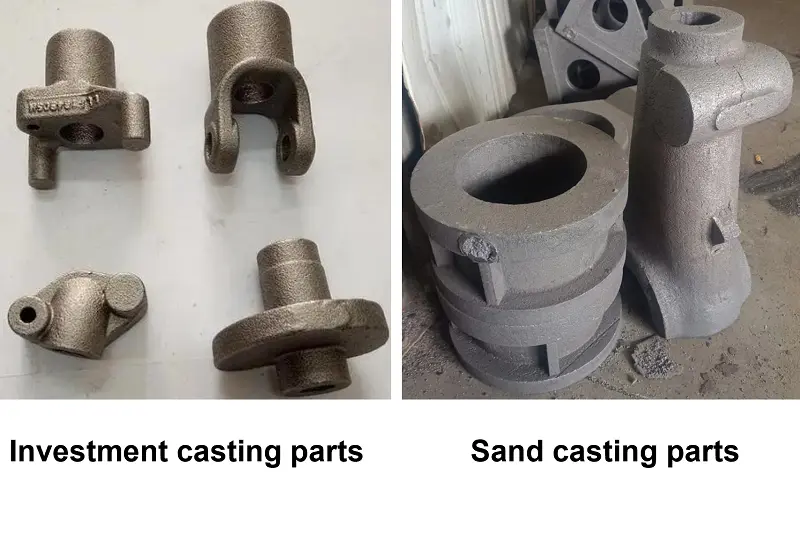
In the field of metal parts manufacturing, the choice between CNC machining and investment casting has long been a challenge for engineers. CNC machining is renowned for its exceptional flexibility and precision, while investment casting holds a significant position in mass production due to its cost advantages. In simple terms, for metal parts that require high precision but are needed in small quantities (e.g., prototypes), precision CNC machining is the preferred option. For batch production—whether small or large—parts with complex geometries and less stringent precision requirements may be suitable for investment casting, or a combination of investment casting and CNC machining. Next, let's explore the applicable scenarios for each process through the following points and reveal the direction of technological innovation in investment casting.


-
1. Comparison of CNC Machining and Investment Casting
On the stage of metal parts manufacturing, CNC and casting have always been fierce competitors. To more clearly demonstrate their respective strengths and weaknesses, let's dive into this ultimate showdown and see what the data has to say.
- a). Cost Comparison
In terms of cost, CNC machining and investment casting show significant differences. Taking stainless steel as an example, precision CNC machining typically achieves material utilization rates of only 30%–50%, with per-part machining costs ranging from tens to hundreds or even thousands of RMB, making it more suitable for small-batch production (fewer than 100 parts). Investment casting, on the other hand, can achieve per-part costs as low as one-tenth those of CNC machining (based on data from the 2022 Foundry Management & Technology). Although mold development requires a separate mold cost (ranging from thousands to over ten thousand RMB), it is highly suitable for mass production (especially for batches exceeding 1,000 parts).
- b). Efficiency and Complexity
In terms of efficiency and complexity, CNC machining and investment casting each have their own strengths. CNC machining can typically deliver prototypes in a short time, but machining complex structures such as deep cavities, thin walls, or internal channels significantly increases processing time. For example, a medical device component with an internal honeycomb structure saw a 300% increase in CNC machining time. In contrast, investment casting—though requiring 2–4 weeks for wax pattern mold fabrication—can produce complex geometries in a single step, such as the water-cooling channels in automotive engine blocks.
- c). Precision and Performance
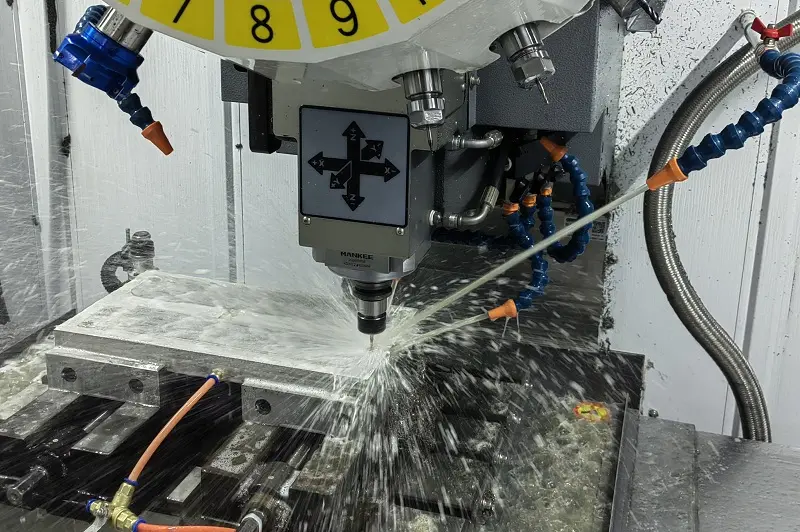
In terms of precision and performance, CNC machining and investment casting each have their own characteristics. CNC machining achieves dimensional tolerances of ±0.01mm (or even ±0.005mm) and surface roughness of Ra 0.8μm. However, metal fibers may be cut during the machining process, potentially affecting the mechanical properties of the part. Investment casting typically offers precision of ±0.1mm and surface roughness of Ra 6.3μm. In terms of precision, precision CNC machining holds an absolute advantage.
2. Challenges Facing Investment Casting
Despite its cost advantages, investment casting also faces several challenges: the development cycle is relatively long. During the casting process, if local modifications to the product are required, the mold must be altered, which often extends the development cycle and may affect product delivery timelines. There are also design limitations. Traditional parting line techniques restrict topological optimization to some extent, as products must be designed with demolding requirements in mind, which may also impact product performance.
3. Selection and Discussion of Manufacturing Strategies
When facing different production requirements, choosing the appropriate manufacturing strategy is particularly important. According to the process matching model in the 2023 Wohlers Report, we can see the advantages and applicability of various manufacturing technologies across different production volumes. For small-batch production, such as fewer than 50 parts, precision CNC machining is the preferred choice due to its cost advantages (compared to investment casting). In the medium batch range of 100 to 500 parts, investment casting can significantly reduce overall costs, with reductions of 18% to 45%. For large-scale production, investment casting tends to deliver even better results.
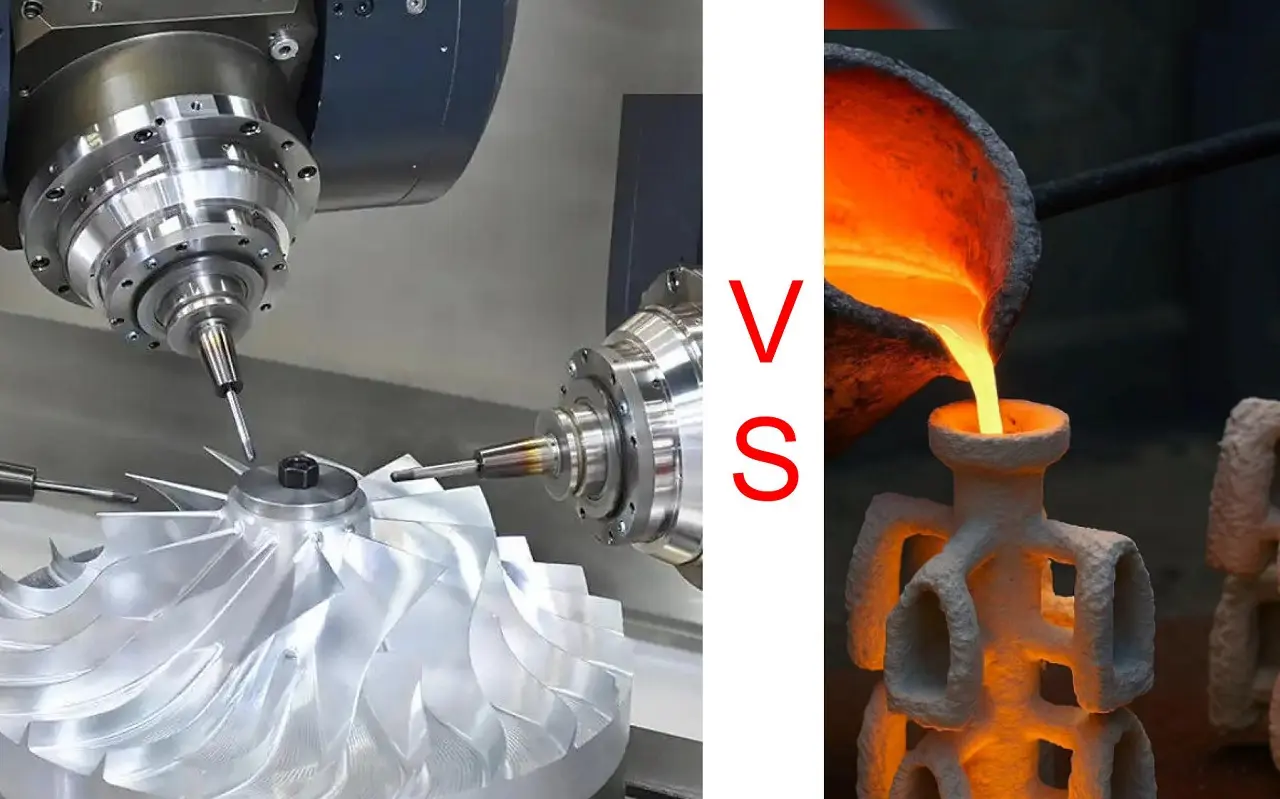
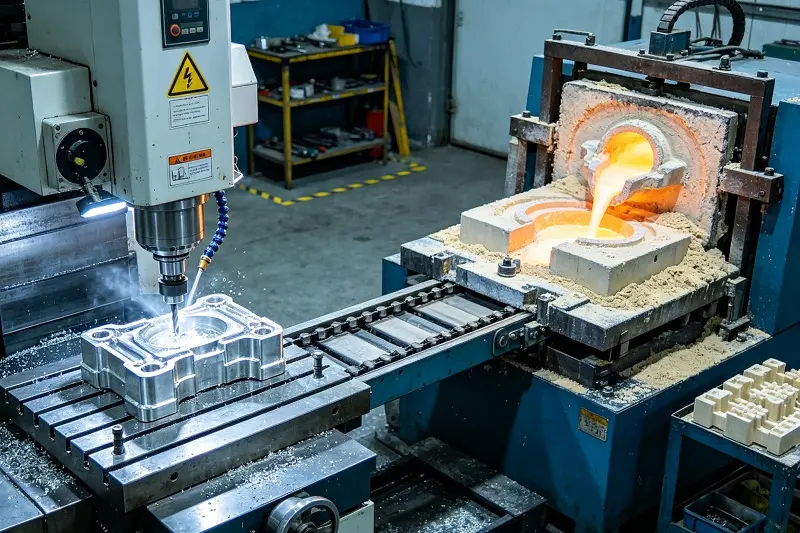
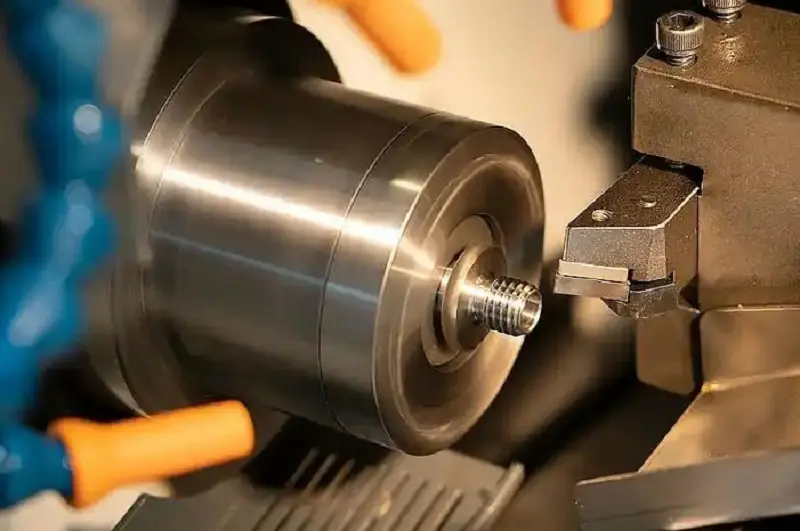
Precision CNC machining and investment casting are not mutually exclusive; rather, they can integrate with and enhance each other. When we refer to CNC machining in this context, we are generally talking about CNC milling or CNC mill-turn compound machining, excluding CNC turning for the time being.
Why do we say this? For example, in the early stages of new product development, prototypes may need frequent changes. In such cases, CNC machining is the most suitable method for producing prototype parts—when design modifications are required, CNC machining offers high efficiency and easy program changes. However, once the design is finalized and no further revisions to the part are needed, precision casting can be used, providing high efficiency and low cost.
Consider another scenario: mass production of
parts with complex structures, where certain areas require high precision for
assembly or functional needs. If investment casting alone cannot meet the
precision requirements, and CNC machining alone is too costly, what is the
solution? This is the perfect opportunity for the two processes to work
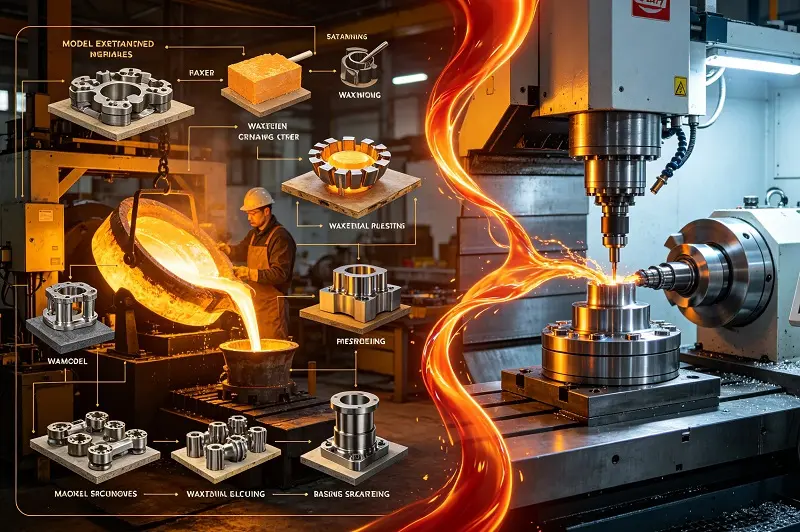
together. We can first use investment casting to produce the parts, leaving
excess material (stock allowance) in areas that require high precision. After
the investment casting process is complete, we can use CNC machining to perform
secondary machining on those high-precision areas. This approach not only
reduces costs but also meets the required specifications. Therefore, CNC
machining and investment casting complement and integrate with each other.