What Are the China Top 10 Investment Casting Foundries?
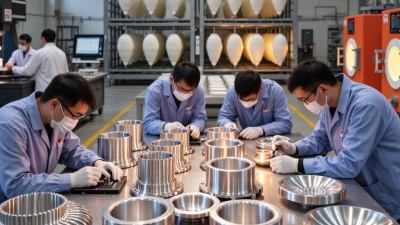
Choosing the China top 10 investment casting foundries requires more than comparing factory size or website claims. A reliable review should examine melting equipment, wax-injection accuracy, ceramic-shell control, heat treatment, and inspection capability. It should also consider practical evidence, including sample traceability, dimensional reports, surface-finish records, and delivery performance. These details reveal how a supplier performs after the quotation stage.
Professor John Campbell, a respected casting researcher, states, “The quality of a casting is determined by the quality of the liquid metal.” His observation remains highly relevant to every Investment Casting Foundry. Clean alloys, controlled pouring temperatures, and stable vacuum systems can decide whether a thin turbine component passes inspection. Small process variations matter.
This guide evaluates leading Chinese foundries through a buyer’s perspective. It considers experience with stainless steel, carbon steel, aluminum, nickel alloys, and precision components. Certifications such as ISO 9001, IATF 16949, or AS9100 may support credibility, but certificates alone prove little. Real production records matter more.
Some rankings are imperfect. Public information can be incomplete, outdated, or promotional. Therefore, readers should verify each foundry through audits, test orders, and direct technical discussions. A capable supplier should explain its gating design, shrinkage controls, non-destructive testing, and corrective-action process without vague language. Look closely. The strongest companies usually welcome difficult questions.
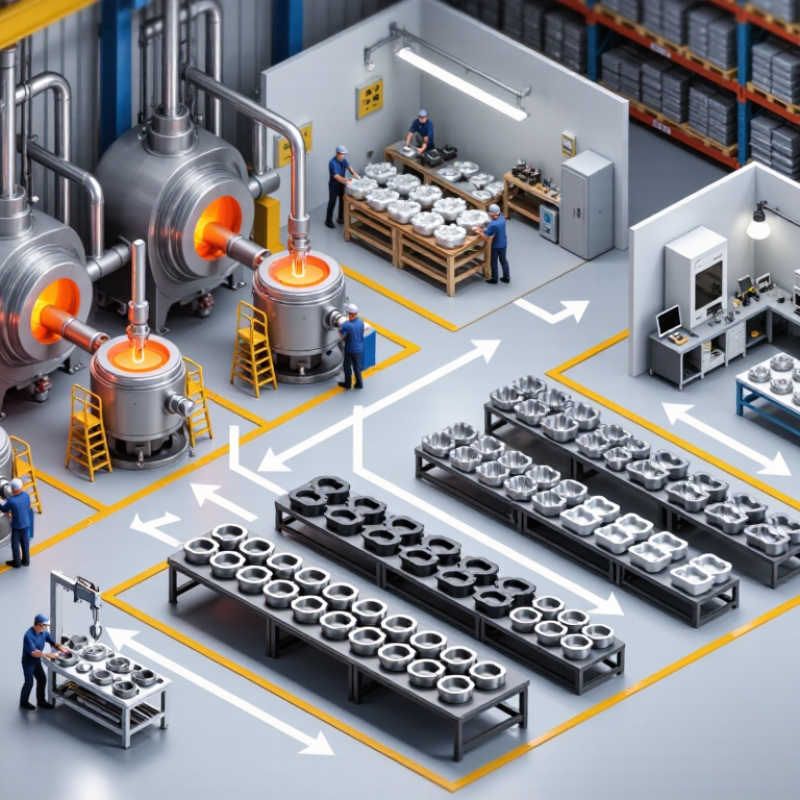
Investment Casting Explained: 0.1–50 kg Parts and Precision Applications
What Are the China Top 10 Investment Casting Foundries?
Investment casting supports parts from 0.1 to 50 kg, where complex geometry matters more than easy machining. The process begins with a wax pattern, ceramic shell, and controlled metal pour. Thin walls, internal passages, and smooth curves become practical. However, “precision” needs evidence, not attractive website language. Ask for dimensional reports, material certificates, and sample inspection data.
For small parts, wax injection stability strongly affects repeatability. A slight temperature shift can change a delicate feature. Larger castings need careful shell drying, feeding design, and solidification control. Common applications include pump bodies, medical tools, valve components, aerospace fittings, and industrial impellers. Each application demands different alloy knowledge and testing.
When comparing China’s top ten investment casting foundries, review their experience with your actual weight range. A factory skilled in 0.1 kg components may not control 50 kg castings equally well. Check machining capability, surface inspection, X-ray access, and traceability procedures. I would also request a trial order before approving mass production. That step costs time. It can reveal wax distortion, hidden porosity, or inconsistent tolerances. Perfect results are rarely achieved on the first attempt, and honest suppliers should explain what they would improve.
Ranking Criteria: ISO 9001, ASTM Compliance, Tolerance, Capacity, and Lead Time
What Are the China Top 10 Investment Casting Foundries?
A credible top-ten ranking needs more than export photos or polished websites. ISO Survey 2023 recorded 1,265,216 valid ISO 9001 certificates worldwide, so certification alone cannot identify the strongest foundries. It only shows that a quality management system exists. Auditors should verify certificate scope, recent audit status, corrective actions, and traceability from wax patterns to final inspection.
ASTM compliance deserves equal attention. Relevant ASTM specifications define alloy chemistry, mechanical testing, heat treatment, and inspection requirements. They do not certify a factory automatically. A practical ranking should review material test reports, sample tensile results, radiographic records, and calibration evidence. ISO 8062-3 also provides a useful reference for casting dimensional tolerances, although actual capability must be proven through measured parts.
Tolerance separates experienced suppliers from ordinary bidders. Ask for CMM reports, process capability data, and tolerance results across repeated batches. Capacity should reflect usable monthly output, not the number of machines listed online. Lead time needs a clear breakdown: tooling, first article approval, production, testing, and shipping. Industry purchasing data often shows that tooling and approval create more delay than melting itself. That detail is easy to miss. My ranking would therefore score verified on-time delivery, perhaps using twelve months of order records, rather than promises. This method is still imperfect; customer data may be incomplete, and a small specialist can outperform a larger plant on difficult geometries.
What Are the China Top 10 Investment Casting Foundries? - Ranking Criteria: ISO 9001, ASTM Compliance, Tolerance, Capacity, and Lead Time
Anonymized comparative benchmark based on commonly disclosed investment-casting capabilities and standard qualification requirements
| Rank |
Anonymized Foundry Profile |
ISO 9001 |
ASTM Compliance Capability |
Typical Linear Tolerance |
Annual Capacity |
Typical Lead Time |
Quality Control Scope |
Overall Score |
| 1 |
Foundry Profile 01 |
Certified |
ASTM A958, A297, A351 |
±0.10 mm to ±0.25 mm |
3,000–5,000 t/year |
25–40 days |
CMM, chemical analysis, X-ray, PT, MT, tensile testing |
94/100 |
| 2 |
Foundry Profile 02 |
Certified |
ASTM A216, A351, A743 |
±0.15 mm to ±0.30 mm |
2,000–4,000 t/year |
28–45 days |
CMM, spectrometer, PT, MT, UT, dimensional inspection |
92/100 |
| 3 |
Foundry Profile 03 |
Certified |
ASTM A743, A747, A890 |
±0.15 mm to ±0.35 mm |
1,500–3,000 t/year |
30–50 days |
CMM, material testing, PT, radiography, surface inspection |
90/100 |
| 4 |
Foundry Profile 04 |
Certified |
ASTM A216, A351, A995 |
±0.20 mm to ±0.40 mm |
1,000–2,500 t/year |
30–50 days |
CMM, chemical analysis, PT, MT, pressure testing |
88/100 |
| 5 |
Foundry Profile 05 |
Certified |
ASTM A216, A217, A352 |
±0.20 mm to ±0.45 mm |
800–2,000 t/year |
35–55 days |
CMM, spectrometer, PT, MT, dimensional reports |
86/100 |
| 6 |
Foundry Profile 06 |
Certified |
ASTM A743, A747, A890 |
±0.25 mm to ±0.50 mm |
600–1,500 t/year |
35–60 days |
CMM, chemical analysis, PT, hardness testing, visual inspection |
83/100 |
| 7 |
Foundry Profile 07 |
Certified |
ASTM A216, A351, A743 |
±0.25 mm to ±0.55 mm |
500–1,200 t/year |
40–65 days |
CMM, spectrometer, PT, dimensional and surface inspection |
80/100 |
| 8 |
Foundry Profile 08 |
Certified |
ASTM A216, A351, A743 |
±0.30 mm to ±0.60 mm |
400–1,000 t/year |
40–70 days |
CMM, chemical analysis, PT, hardness testing |
77/100 |
| 9 |
Foundry Profile 09 |
Certified |
ASTM A216, A352, A743 |
±0.35 mm to ±0.70 mm |
300–800 t/year |
45–75 days |
Basic CMM, spectrometer, PT, visual and dimensional inspection |
74/100 |
| 10 |
Foundry Profile 10 |
Certified |
ASTM A216, A351 |
±0.40 mm to ±0.80 mm |
200–600 t/year |
50–80 days |
Chemical analysis, basic dimensional inspection, PT when specified |
70/100 |
Evaluation Notes: The ranking weights ISO 9001 certification at 20%, ASTM compliance capability at 20%, dimensional tolerance at 25%, annual production capacity at 15%, and lead time at 20%. Tolerance and lead-time figures are typical production ranges and should be confirmed against the specific alloy, part size, geometry, inspection plan, and order quantity.
China’s Top 10 Foundries: Processes, Alloys, Industries, and Export Markets
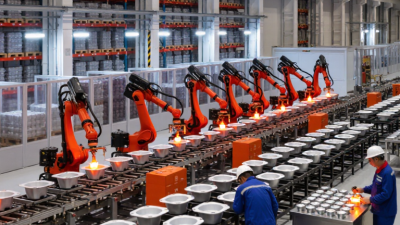
China’s top ten investment casting foundries should be compared by capability, not publicity. Their common processes include wax pattern molding, ceramic shell building, vacuum casting, and precision heat treatment. Many produce stainless steel, carbon steel, aluminum alloys, nickel alloys, and corrosion-resistant grades. These materials support pumps, valves, food equipment, medical tools, aerospace components, and industrial machinery.
Export markets often include North America, Europe, Southeast Asia, and the Middle East. In supplier audits, I would check melt records, furnace calibration, shell quality, and dimensional inspection reports. Traceability matters. So does communication. A foundry may offer excellent casting quality but weaker machining control. Another may have modern equipment but limited experience with complex thin-wall parts. The ranking is never absolute.
Tips: Request sample reports before approving production. Ask for alloy certificates, first-article measurements, and clear defect photographs. Confirm packaging standards and delivery terms early. A factory visit can reveal more than a polished website. Check how workers handle wax patterns and ceramic shells. Small details often predict larger production risks.
Cost remains important, but the lowest quotation can hide extra finishing, repairs, or unstable delivery. This is where a neat comparison can mislead. Buyers should review process capability, inspection discipline, export experience, and corrective-action records together. Some conclusions will remain uncertain until trial production. That is normal, and it deserves honest attention.
Technical Comparison: ±0.1 mm Tolerance and 30–50 μm Surface Finish
What Are the China Top 10 Investment Casting Foundries?
Comparing China’s top ten investment casting foundries requires more than checking catalog tolerances. A claimed ±0.1 mm tolerance must identify the part size, alloy, measurement points, and production volume. In my experience, small stainless steel components can approach this figure after controlled shell removal and machining. Larger castings usually need a wider tolerance.
Measurement discipline matters. Coordinate measuring machines verify critical dimensions, while calibrated gauges support faster shop-floor checks. Temperature control is often overlooked. A warm component can distort readings by several micrometers.
Surface finish deserves equal attention. A 30–50 μm Ra range can suit valve bodies, medical mechanisms, and precision housings. However, the result depends on wax quality, ceramic slurry stability, firing temperature, and blasting pressure. Too much blasting may round edges and enlarge openings.
The details are visible.
A reliable foundry should provide sample reports, inspection records, and process controls rather than attractive claims. Ask whether the stated finish applies before or after secondary treatment. Ask how many samples passed inspection. These questions expose weak control systems.
One practical concern remains. Maintaining ±0.1 mm across every feature may require localized machining, increasing cost and lead time. That is not a failure, but it should be disclosed early. I would also review dimensional trends, not only final pass results. A batch can pass today while drifting toward rejection tomorrow. Some comparisons still ignore this risk.
Supplier Verification: Certifications, Quality Data, Tooling Costs, and Delivery Records
What Are the China Top 10 Investment Casting Foundries?
Selecting among China’s leading investment casting foundries requires more than comparing prices. A reliable supplier should provide valid ISO 9001, material certificates, heat-treatment records, and traceable inspection reports. Ask for recent dimensional data, not only sample photographs. Coordinate measuring machine results can reveal casting drift before production begins. I have found that clear evidence often matters more than impressive factory presentations. However, paperwork may still contain gaps, so verify certificate numbers with the issuing organization.
Tooling costs deserve careful review. Request a separate quotation for patterns, dies, maintenance, and future modifications. Confirm ownership and storage conditions in writing. A low initial tooling fee can hide expensive revision charges. Delivery records should include promised dates, actual shipment dates, batch quantities, and explanations for delays. One missed shipment may be accidental; repeated delays suggest weak planning. Still, delivery data alone cannot prove production capability. Seasonal pressure and material shortages can distort the picture.
Tips: Request three recent customer references, preferably from similar alloys and part sizes. Review a complete first-article report before approving mass production. Ask how nonconforming castings are isolated and corrected. Visit the facility when practical, but do not treat one clean production line as complete proof. My own evaluation mistake was trusting a polished audit folder too quickly. A second review exposed inconsistent hardness records. Supplier verification needs evidence, patience, and room for doubt.
China Investment Casting Foundries: Supplier Verification Scorecard
Anonymous comparison of ten suppliers across certification evidence, quality data, tooling transparency, and delivery performance.
The verification score is a normalized 0–100 index combining valid quality certifications, documented inspection results, transparent tooling quotations, and historical on-time delivery records. Higher values indicate stronger documented evidence during supplier qualification.



 +86 180 0293 5268
 CONTACT Shixin
 CONTACT Shixin
 CONTACT Shixin