How to Choose a Precision Investment Casting Supplier?
Choosing a Precision Investment Casting supplier is not simply a price comparison. It is a decision about process control, communication, and long-term reliability.
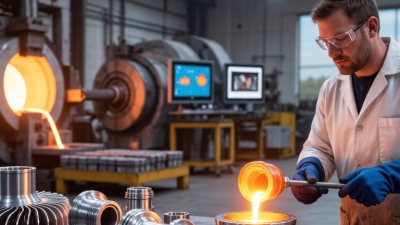
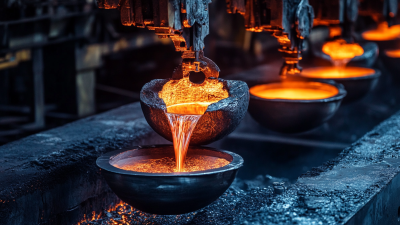
John Campbell, a leading casting researcher, stated, “The quality of a casting is determined by the quality of the liquid metal.” His point remains practical. A supplier may show polished samples, yet the real evidence appears inside its foundry. Look for controlled melting records, alloy verification, ceramic shell consistency, and documented heat treatment. Ask how the company manages wax pattern distortion, thin walls, shrinkage, and dimensional variation. These details often decide whether a prototype becomes a dependable production part.
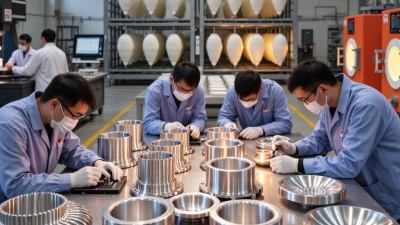
Experience should be visible, not merely claimed. Request inspection reports, material certificates, and examples from similar alloys or industries. Check whether the supplier uses coordinate measuring machines, X-ray inspection, penetrant testing, or process capability studies. Traceability matters when every heat, shell batch, and finishing step must be reviewed. A factory visit can reveal crowded work areas, manual shortcuts, or careful production discipline within minutes.
The lowest quotation can be misleading. Very misleading. Tooling, scrap, secondary machining, and delayed approvals may appear later. A higher initial price might reduce total risk, but that assumption also needs proof. Compare complete costs, lead times, corrective-action practices, and engineering support. No supplier is perfect. The strongest partner admits limitations, explains uncertainty, and improves after a failed trial. This guide examines those practical signals, helping buyers choose a Precision Investment Casting supplier with clearer judgment and fewer expensive surprises.
Understanding Precision Investment Casting Requirements
How to Choose a Precision Investment Casting Supplier?
Understanding Precision Investment Casting Requirements
Precision investment casting begins with a clear definition of the part’s working conditions. Specify the alloy, operating temperature, load, corrosion exposure, and expected service life. Include dimensional tolerances, surface roughness, wall thickness, and critical inspection points. ISO 8062-3 provides a useful framework for casting dimensional tolerances. However, each feature still needs engineering judgment.
Recent market reports show why supplier capability matters. Grand View Research estimated the global investment casting market at about USD 16.4 billion in 2023. Fortune Business Insights reported a similar 2023 estimate of approximately USD 16.7 billion. Their different figures reflect varied market boundaries. The numbers are useful, but not perfect.
Ask suppliers to explain their wax tooling, shell-building, melting, and heat-treatment controls. Request sample inspection reports, material certificates, and traceability records. For complex parts, review simulation results and first-article inspection methods. Confirm whether they use coordinate measuring machines, X-ray testing, or penetrant inspection when required. A low quote can still be the wrong answer. Lead time also needs evidence, not promises.
Share complete CAD files and drawing revisions before requesting a quotation. Discuss annual volume, prototype quantity, packaging, and change-control procedures. One overlooked detail can increase machining or scrap costs. I would question any supplier who cannot explain defect prevention clearly. This is where judgment remains imperfect. Suppliers should welcome technical questions, even uncomfortable ones.
Checking Quality Control and Industry Certifications
When choosing a precision investment casting supplier, inspect its quality system before discussing price. A polished sample can hide unstable production. Ask how the team controls wax injection, ceramic shell building, melting, pouring, and finishing. Request process records, not only photographs. Useful records include melt chemistry, furnace temperature, shell humidity, and operator sign-offs. These details show whether quality is repeatable across batches. That matters when a small dimensional shift affects assembly or fatigue performance.
Study the inspection route in detail. A capable supplier should use calibrated gauges, coordinate measuring machines, and documented sampling plans. For critical passages, radiographic or computed tomography testing may reveal shrinkage and internal inclusions. Surface defects need defined acceptance limits. Ask for material certificates, inspection reports, nonconformance records, and corrective-action evidence. Traceability should connect each casting to its alloy heat, mold, inspection results, and shipment. Without that chain, finding the cause of a failure becomes guesswork.
Certifications can strengthen confidence, but they are not automatic proof of good castings. ISO 9001 shows a managed quality system. AS9100 may suit aerospace work, while ISO 13485 supports certain medical applications. Confirm the certificate scope, issuing body, expiration date, and actual production site. A certificate from another facility is not enough. Audit the workshop if possible. Watch technicians record measurements, segregate rejected parts, and review recurring defects. Do not ignore uncomfortable answers. Even a strong audit can miss a hidden weakness. Honest process data should reveal variation, not conceal it.
Comparing Materials, Costs, Lead Times, and Production Capacity
How to Choose a Precision Investment Casting Supplier?
Material selection should begin with service conditions, not a supplier’s catalog. Stainless steel may suit corrosion exposure, while nickel alloys handle higher temperatures. Ask for chemistry reports, heat-treatment records, and dimensional inspection samples. These documents reveal process discipline. However, I once treated a familiar alloy as a universal solution. That assumption was wrong. Review strength, hardness, operating temperature, and finishing requirements together.
Request a cost breakdown before comparing quotations. Tooling, wax patterns, machining, testing, packaging, and shipping can change the final figure. Low casting prices may hide expensive finishing work. Compare the complete cost per accepted part. Include scrap rates. Also check whether quoted tolerances match the drawing’s real needs. Tighter tolerances often increase inspection and machining costs. A reliable supplier should explain these trade-offs in measurable terms.
Lead time is more than the promised ship date. Review tooling approval, sample production, inspection, and corrective-action stages. Ask how many furnaces, molding lines, and inspection teams support your order. Capacity must be proven, not guessed. During peak demand, shared equipment can extend delivery unexpectedly. Request a realistic production schedule with milestone dates. An audit, virtual or on-site, can confirm staffing and traceability. Still, no plan survives every change. Leave room for technical revisions.
How to Choose a Precision Investment Casting Supplier?
Comparing materials, costs, lead times, and production capacity
This benchmark uses a 0–100 comparison score based on typical investment casting requirements.
High-volume suppliers generally provide broader alloy coverage and stronger production capacity,
while low-volume specialists often offer faster sampling and greater cost flexibility for prototypes.
Actual performance should be confirmed through an RFQ, material certificates, production records, and quoted lead times.
Assessing Communication, Support, and Long-Term Reliability
Choosing a precision investment casting supplier requires more than comparing unit prices. Communication shows how the supplier will manage production risk. Ask who reviews drawings, tolerances, and alloy requirements. A capable team should identify unclear dimensions before tooling begins. During one project, a missing datum caused repeated questions and delayed a wax pattern. That mistake was avoidable. Request a written review with marked drawings, assumptions, and delivery dates. Notice response quality, not just speed. Do engineers answer directly? Do they explain trade-offs in plain English? Short video calls can reveal practical knowledge. So can a clear meeting record sent afterward. If every answer comes from sales, technical ownership may be weak.
Support becomes more important after the purchase order.
Ask for sample inspection reports, process updates, and realistic escalation contacts. Check whether the supplier can discuss shrinkage, surface finish, machining allowance, and dimensional variation. Ask how rejected castings are investigated. A reliable team should provide root-cause details and corrective actions, not vague apologies. I have learned that fast replies do not always mean strong support. Sometimes they only hide incomplete answers. Review communication during a trial order. Record response times, revision control, and promised shipment dates. Then compare those records with actual performance. Long-term reliability also requires stable technical staff, documented process controls, and honest capacity information. A supplier that admits a limitation may deserve more trust than one promising everything. Keep reviewing them after delivery, because reliability is proven across repeated orders, not a single successful batch.



 +86 180 0293 5268
 CONTACT Shixin
 CONTACT Shixin
 CONTACT Shixin