


 +86 180 0293 5268






News





01
Balancing Lightweight and Strength in CNC Machining of Bicycle Parts.
2026-02-25
Balancing Lightweight and Strength in CNC Machining of Bicycle Parts: A Comparative Analysis of Materials and Design.
Have you ever struggled to shave even a few extra grams off a crank arm or brake caliper, while still ensuring it can withstand the peak torque of a sprinter? This challenge is the enduring pursuit of virtually every designer and manufacturer of high-end bicycle components. It’s not simply about “weight reduction”—it’s about finding a dynamic, optimal balance between materials science, structural mechanics, and precision manufacturing.
We’ll take a deep dive into the core strategies behind achieving this delicate balance. Starting from the microscopic properties of materials, we’ll explore the macro-level intelligence of structural design, and finally, examine how precision CNC machining brings it all to life. By the end of this discussion, you’ll have a clear understanding of how to systematically address the central contradiction between lightweighting and strength in bicycle parts.


-
-
1. Material Selection: The First Step Toward Balancing Lightness and Strength
Every design begins with material. Choosing the right material for bicycle components is like selecting the proper nutrition for an athlete—it sets the baseline for performance. In CNC machining, we typically focus on a select group of metals and engineering materials with excellent specific strength (strength-to-density ratio). The wrong choice can lead to parts that are either too heavy or prone to catastrophic failure under load.
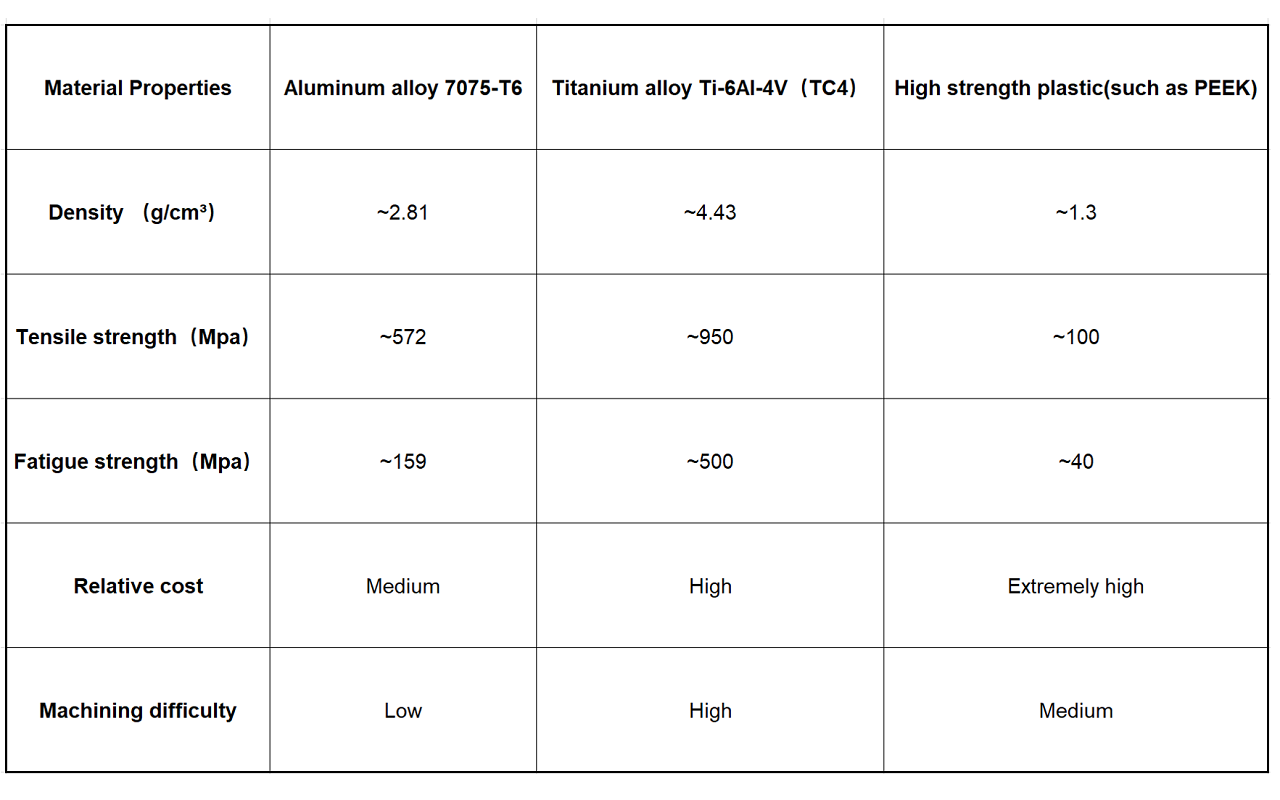
Among the top contenders, 7075-T6 aluminum and Ti-6Al-4V (TC4) titanium stand out. 7075 aluminum has long been the mainstream choice for high-end bicycle components, thanks to its outstanding strength-to-weight ratio and relatively mature machining process. Its yield strength can reach approximately 500 MPa—comparable to certain low-carbon steels—while its density is only about one-third that of steel. However, when performance requirements are pushed to the limit, titanium alloys begin to show their edge.
To better illustrate the differences, a simple performance comparison can help clarify their respective roles:
Material
Density (g/cm³)
Yield Strength (MPa)
Fatigue Strength
7075-T6 Aluminum
2.81
~500
Moderate
Ti-6Al-4V
4.43
~880
High
As the table shows, although titanium alloy is denser, its tensile strength—and especially its fatigue strength (resistance to cyclic loading)—far exceeds that of aluminum. This makes it ideal for components such as bottom brackets and pedal spindles, which endure repeated high-stress cycles. According to data from ASM Aerospace Specification Metals Inc., Ti-6Al-4V demonstrates a significantly higher fatigue limit at 10⁷ cycles than 7075-T6.
That said, titanium is not always the answer. Cost and machinability are real-world constraints that must be considered. A strong solution often comes from making informed trade-offs based on a clear understanding of these differences. Professional CNC machining providers like Dongguan SX typically offer customized material consulting to help clients select the most cost-effective option based on the specific application—whether it’s a handlebar demanding maximum stiffness or a seat clamp requiring a degree of flexibility—and budget.
2. Structural Design Defines the Upper Limit of Material Potential
Selecting the right material only gets you halfway. The art of design lies in building the strongest possible structure with the least amount of material. Traditional “rule-of-thumb” design or over-reliance on generous safety factors is no longer sufficient for today’s performance-driven components. The modern design process for bicycle parts is now deeply integrated with computer-aided engineering thinking.
Among the most critical technologies are Finite Element Analysis (FEA) and Topology Optimization.
3. Finite Element Analysis Reveals Stress Distribution with Precision
FEA is a powerful digital simulation tool that breaks down a complex part model into millions of tiny elements. By simulating real-world riding forces—such as pedaling, braking, and impacts—it calculates the stress magnitude and distribution across each element with high accuracy. The resulting stress contour maps allow designers to instantly identify stress concentration areas that require reinforcement, as well as low-stress zones—essentially “excess material”—that can be safely removed. An FEA-optimized bicycle brake rotor, for instance, can weigh over 15% less than a non-optimized design, while still delivering better heat dissipation and structural stability under emergency braking.
4. Topology Optimization: A Tool for Creating Biomimetic Structures
If FEA is a diagnostic tool, topology optimization is the scalpel. Based on given loads, constraints, and performance objectives—such as maximum stiffness or minimum weight—the algorithm autonomously "grows" the optimal distribution of material. The resulting designs often take on organic, bone-like or root-like forms, where every gram of material is placed exactly where it's needed most. Studies show that custom CNC precision components designed through topology optimization can achieve weight reductions of up to 40% compared to conventional designs, without sacrificing—and often improving—structural performance. This approach is widely applied in the design of high-end bicycle stems, disc brake calipers, and other critical components.
Of course, these complex, biomimetic structures place extremely high demands on manufacturing processes. This is precisely where CNC machining—particularly 5-axis CNC machining—comes into play.
5. CNC Machining: The Bridge Between Design and Reality
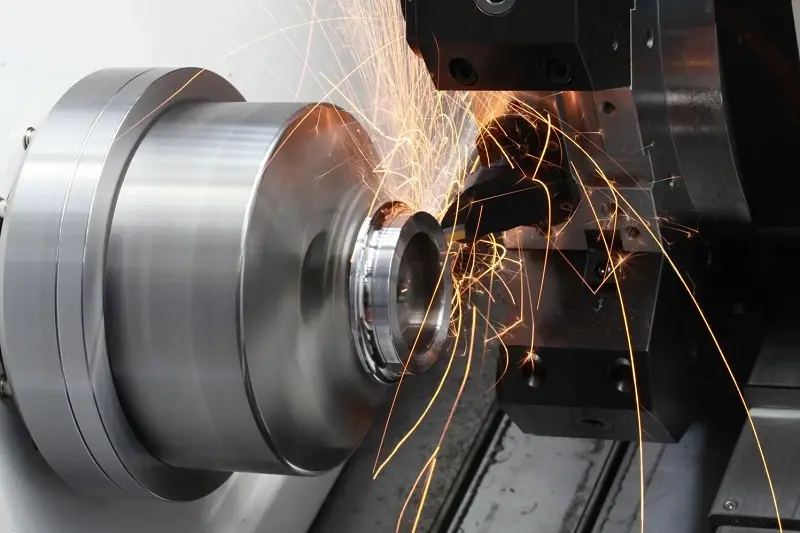
A flawlessly optimized topology design in a computer is worthless if it cannot be precisely manufactured. CNC (Computer Numerical Control) machining—especially multi-axis machining—is the critical link that turns these lightweight designs into tangible, high-performance components.
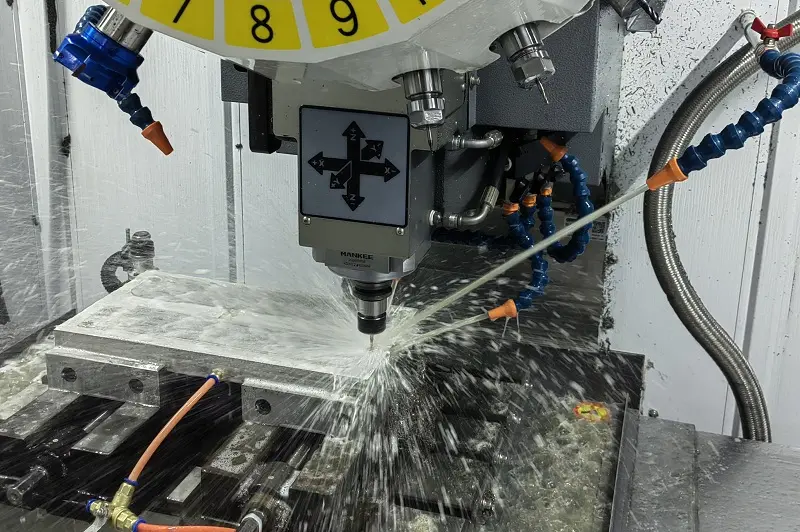
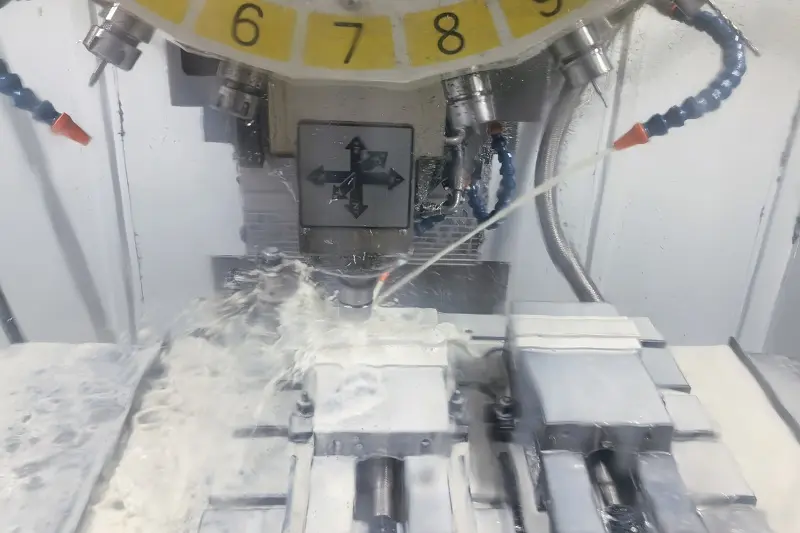
Traditional weight-reduction methods, such as drilling holes or cutting simple grooves, often reduce weight but create stress concentrations that compromise overall strength. Modern CNC machining, by contrast, can accurately cut the smooth transition surfaces and irregular internal cavities generated by topology optimization. With 5-axis CNC machines, cutting tools can approach the workpiece from virtually any angle, completing complex geometries in a single setup. This eliminates the accuracy loss caused by multiple repositionings and faithfully reproduces every minute detail of the original design model.
6. Systematic Thinking: The Only Path to the Optimal Solution
Looking back at the entire process, it becomes clear that achieving the perfect balance between lightweight and strength in CNC-machined bicycle components is never the result of a single breakthrough. It is a tightly interlinked systems engineering challenge.
It begins with a deep understanding of the physical properties of materials—requiring us to look beyond just strength and density, and to consider fatigue life and machinability as well. It relies on the empowerment of advanced design tools such as FEA and topology optimization, combining the engineer’s intuition with the immense computational power of algorithms to create highly efficient, biomimetic structures. And finally, it must be realized through high-precision CNC machining—transforming the ideal model in the digital world into a physical reality that is both strong and light.
-
Looking ahead, as new materials continue to emerge and additive manufacturing (3D printing) becomes increasingly integrated with subtractive machining, the design and production of bicycle components will undoubtedly enter a new era. Yet no matter how technology evolves, this relentless pursuit of balance between material, design, and process will remain the core driver propelling the industry forward. Only by mastering this systematic way of thinking can we truly harness the art of lightweight and strength.
For us as a CNC services provider, this also
presents a significant challenge. We must continuously elevate our capabilities
in machining services and keep pace with the times—only then can we stay
relevant and thrive in the evolving CNC industry.