What is Metal Parts Manufacturing and How Does It Work?
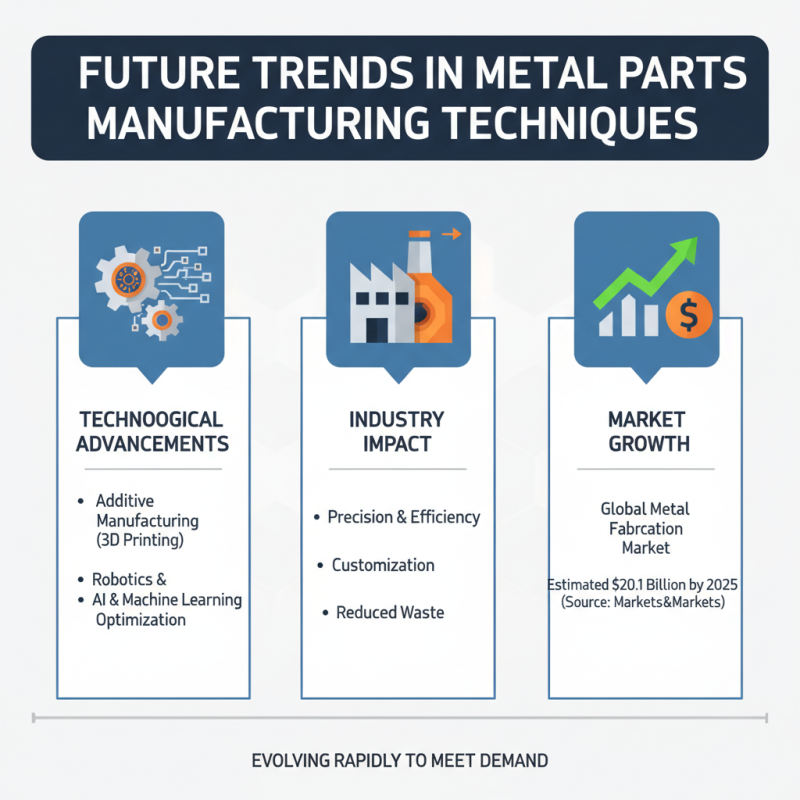
Metal Parts Manufacturing plays a vital role in today's industrial landscape. It is the backbone of various sectors, including automotive, aerospace, and electronics. According to a report by Grand View Research, the global metal fabrication market is projected to reach $23.6 billion by 2027. This growth underscores the increasing demand for precision-engineered metal components.
However, challenges persist in the industry. Many manufacturers struggle with production efficiency and waste management. The need for innovative solutions is pressing. For instance, adoption of automation can significantly improve throughput. Yet, many firms remain hesitant to invest in new technologies. Such reluctance may stem from budget constraints or fear of change.
Moreover, sustainability has become a hot topic. As more companies prioritize eco-friendly practices, those in Metal Parts Manufacturing face mounting pressure to reduce their carbon footprint. Addressing this challenge demands a careful balance between quality, cost, and environmental impact. This complexity invites reflection and re-evaluation of current practices in the field.
What is Metal Parts Manufacturing?
Metal parts manufacturing is a crucial segment of the manufacturing industry. It involves creating metal components used in various applications, from automotive to aerospace. According to the Global Metal Parts Manufacturing Market report, this sector is expected to grow at a compound annual growth rate (CAGR) of 5.2% from 2021 to 2028. This growth is driven by the rising demand for lightweight and durable metal parts.
The process begins with raw metal materials. These are shaped through methods like forging, casting, and machining. Each technique has its advantages and drawbacks. For instance, while casting allows for complex shapes, it may require more finishing work. Understanding the right method for a specific part is critical.
Tips: Choosing the proper materials can greatly impact quality. It is essential to assess the environment the part will operate in. Some metals corrode faster than others. Regularly reviewing manufacturing practices can lead to better efficiency.
What is Metal Parts Manufacturing and How Does It Work?
| Manufacturing Process |
Description |
Materials Used |
Applications |
| CNC Machining |
A subtractive manufacturing process that utilizes computer-controlled machines to remove material from metal blocks. |
Aluminum, Steel, Brass |
Aerospace, Automotive, Medical Devices |
| Injection Molding |
A manufacturing process for producing parts by injecting molten materials into a mold. |
Polymer Metal Composites |
Consumer Products, Electronics, Automotive Components |
| Stamping |
A manufacturing process that uses a die to cut or shape metal sheets into desired forms. |
Steel, Aluminum |
Appliances, Vehicle Parts, Hardware |
| Laser Cutting |
A process that uses a focused laser beam to cut materials with high precision. |
Stainless Steel, Mild Steel |
Signage, Decorative Metal, Industrial Parts |
| Welding |
A process of joining materials, usually metals or thermoplastics, through high heat. |
Steel, Aluminum |
Construction, Automotive Manufacturing, Shipbuilding |
Key Processes in Metal Parts Manufacturing
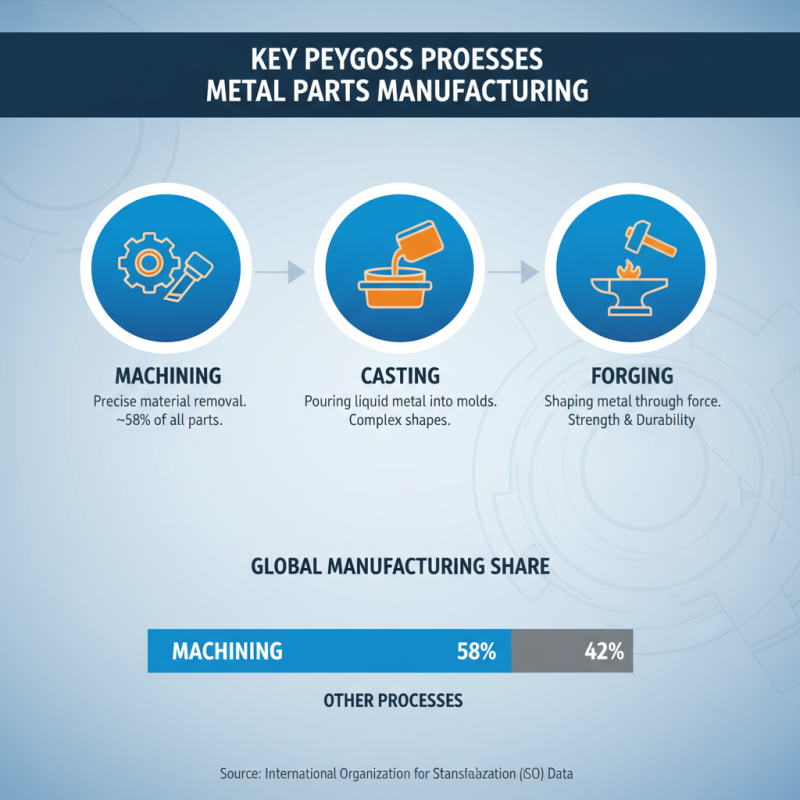
Metal parts manufacturing is a complex and crucial process in various industries. The key processes vary widely, each contributing to the final product’s quality and performance. Common methods include machining, casting, and forging, which are designed for specific applications. Data from the International Organization for Standardization indicates that approximately 58% of all manufactured parts involve some form of machining.
Machining involves removing material from a solid block to create the desired shape. This method can achieve tight tolerances, typically within ±0.005 inches. It is often used in high-precision applications. Casting, on the other hand, involves pouring molten metal into a mold, allowing for intricate designs. According to industry reports, casting can reduce material waste by up to 70%, but it requires careful temperature control.
Forging, another key process, shapes metal using compressive forces. This makes the end product stronger and more reliable. However, it can have a higher initial cost due to the energy and equipment needed. Despite these advances, challenges remain. Factors like machine downtime and inconsistent material quality can hinder productivity. Finding the balance between automation and manual inspection is a constant struggle. Each method has its advantages and disadvantages, leading to ongoing discussions in the manufacturing community about best practices and innovations.
Materials Used in Metal Parts Production
Metal parts manufacturing relies heavily on various materials to produce high-quality components. Commonly used materials include steel, aluminum, and titanium. Each material has its unique properties that cater to different applications. For instance, steel offers strength and durability, making it ideal for heavy machinery. Aluminum, on the other hand, is lightweight and resistant to corrosion. It is frequently used in the aerospace industry. Titanium stands out for its exceptional strength-to-weight ratio, which is essential in medical implants and high-performance applications.
The choice of material is crucial but can be perplexing. Not all materials suit every project. It is essential to consider factors like cost, processing techniques, and end-use requirements. Steel can be economical but may not perform well in extreme conditions. Aluminum might be a better choice for lightweight projects, even if it comes at a higher price. Selecting the wrong material can lead to significant failures in production. Manufacturers must understand the strengths and weaknesses of each material in order to achieve optimal results.
Monthly Production of Metal Parts by Material Type
Applications of Metal Parts in Various Industries
Metal parts play a vital role across various industries. The automotive sector, for instance, relies heavily on metal components for manufacturing vehicles. According to industry reports, metal parts account for about 70% of a vehicle's total weight. This emphasizes their importance in enhancing durability and safety.
Aerospace is another sector where metal parts shine. Aircraft require precision and strength. Reports show that over 80% of structural components in modern airplanes are made from metal. These parts are essential for withstanding extreme temperatures and pressures during flight. The necessity for lightweight metals has led to innovations, such as aluminum alloys and titanium, improving fuel efficiency and performance.
Tips to consider: Always evaluate the specific metal properties you need for your application. This could include factors like corrosion resistance or tensile strength. Additionally, collaborate closely with manufacturers to ensure that the produced parts meet the desired specifications. Sometimes, the choice of metal might not be ideal, leading to unexpected challenges like excessive weight or cost. Balancing quality and cost is crucial for success in metal parts manufacturing.



 +86 180 0293 5268
 CONTACT Shixin
 CONTACT Shixin
 CONTACT Shixin