Investment Casting Steel Guide What You Need to Know?
Investment Casting Steel is a crucial manufacturing process. It allows for incredible precision and intricate details in metal parts. This method benefits various industries, from aerospace to automotive and medical equipment.
Understanding Investment Casting Steel is essential for anyone involved in production. This technique begins with creating a mold, often made of wax or plastic. Once formed, it gets coated with a ceramic shell. After heating, the shell hardens, and the wax is melted away. What remains is a cavity for pouring steel.
However, challenges arise during this process. Achieving the perfect mold can be tricky. Sometimes, the molten steel might not fill all spaces, leading to defects. Each cast has its unique hurdles, requiring attention to detail. The outcomes can vary. Careful planning and execution are vital to ensure quality. This guide will help you navigate the complexities of Investment Casting Steel.

Understanding the Basics of Investment Casting in Steel Production
Investment casting is crucial in steel production. This process allows for complex shapes and fine details. In fact, about 70% of precision castings are done through investment casting. This technique supports a variety of industries, including aerospace and automotive.
In investment casting, a wax pattern is coated in a ceramic shell. This creates a mold that can withstand high temperatures. After the mold is heated, the wax is melted away. Studies show that investment casting can achieve tolerances as tight as ±0.005 inches. However, maintaining these tolerances can be challenging and requires careful monitoring.
The yield rates for investment casting can vary. Industry data indicates that the yield can be as low as 60% in some cases. Factors like design complexity and material choice impact production efficiency. Designers should always evaluate if the casting method fits their needs. Balancing detail with manufacturability is essential. Proper assessment can lead to better outcomes in project time and costs.
Key Advantages of Using Investment Casting for Steel Components
Investment casting is a popular method for producing steel components. This technique offers several key advantages that make it a preferred choice for many industries. One of the main benefits is the ability to create complex shapes with high precision. The process allows intricate designs that would be difficult to achieve with other methods. This leads to minimal material waste and efficient production.
Another significant advantage is the excellent surface finish that investment casting can provide. Components produced through this method often require little to no machining afterward. This saves time and reduces production costs. Furthermore, the consistency in size and quality is impressive, which helps in meeting stringent specifications.
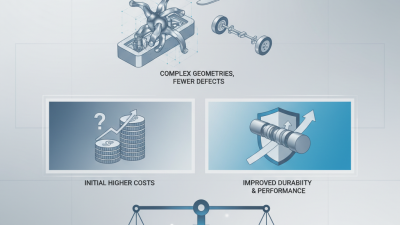
However, it is essential to consider that investment casting does have some drawbacks. The initial setup can be costly and time-consuming. Patterns must be carefully crafted to ensure accuracy. Additionally, while the process is efficient for large runs, it may not be ideal for small quantities due to setup costs. Each decision should be weighed against the potential benefits and drawbacks.
Materials and Alloys Commonly Used in Steel Investment Casting
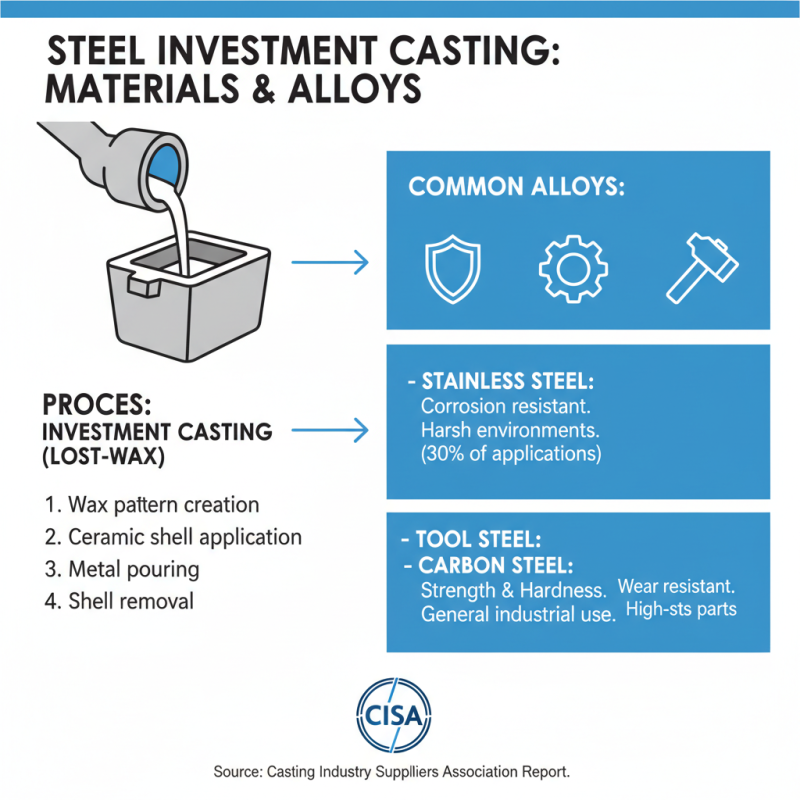
Investment casting, often called lost-wax casting, demands specific materials for optimal results. Steel alloys play a vital role in this process. Commonly used alloys include stainless steels, carbon steels, and tool steels. Stainless steel, with its excellent corrosion resistance, is favored for parts exposed to harsh environments. According to a report by the Casting Industry Suppliers Association, stainless steel accounts for nearly 30% of investment casting applications.
Carbon steels are often employed for structural elements where strength is crucial. They typically contain around 0.05% to 0.25% carbon. While they offer good hardness, they are not as corrosion-resistant as stainless versions. Tool steels, known for their rigidity and ability to hold shape, find usage in intricate molds and dies. The American Foundry Society highlights the growing trend of using low-alloy steels, which combine the benefits of multiple elements to enhance mechanical properties without excessive weight.
Challenges with materials remain in the investment casting arena. The selection of an improper alloy can lead to microstructural issues. Defects such as porosity may arise if the casting process is not correctly aligned with the material's properties. Continuous refinement in alloy compositions is necessary. Feedback loops from quality assessments can provide vital learning experiences. Adjustments in temperature and timing often result in better yields. Understanding the nuances of these materials is essential for achieving high-quality investment castings.
The Investment Casting Process: Step-by-Step Overview
The investment casting process begins with creating a wax model. This model represents the final shape of the metal part. After the model is made, a ceramic shell is formed around it. This shell is crucial as it will hold the molten metal during the pour.
Once the shell hardens, the wax is melted out, leaving a cavity. This step can be trickier than it seems. The temperature control must be precise to avoid shell cracking. After the wax removal, the shell is pre-heated before pouring in the molten metal. This heating helps improve the quality of the casting.
After pouring, there’s a wait for cooling. It’s a delicate balance; if cooled too fast, it can cause internal stresses. After cooling, the ceramic shell is broken away. This can be messy, and small imperfections might be revealed. Careful finishing is required to address these flaws. Each stage has its challenges, making the process meticulous yet rewarding.
Investment Casting Steel Usage in Industries
Quality Control Standards and Testing for Investment Cast Steel Products
Quality control in investment cast steel products is paramount. Adhering to stringent standards ensures the durability and reliability of castings. Reports indicate that nearly 30% of all defects in steel castings arise from improper quality control processes. Monitoring procedures must cover every aspect, from raw material selection to the final inspection.
Testing is crucial. Techniques such as non-destructive testing (NDT) help identify unseen flaws. Industry standards recommend at least 10% of produced items undergo NDT to ascertain quality. However, it's common for smaller manufacturers to overlook this, risking product integrity.
The ASTM A536 standard outlines toughness and ductility requirements, yet compliance is often inadequate. Some manufacturers may prioritize speed over quality. This practice can lead to compromised end products. There's a need for a cultural shift in the industry, emphasizing the long-term benefits of maintaining rigorous quality control.



 +86 180 0293 5268
 CONTACT Shixin
 CONTACT Shixin
 CONTACT Shixin