Investment Casting Foundry Tips for Global Buyers How to Choose?
Choosing the right Investment Casting Foundry is crucial for ensuring product quality and cost-effectiveness. Buyers must navigate various factors, including material capabilities, technical expertise, and production processes. These aspects directly influence the final outcome and overall project success.
Experience is essential when selecting a foundry. A well-established Investment Casting Foundry often has a proven track record. However, newer foundries might offer innovative techniques or competitive pricing. Thus, buyers must evaluate reliability and capability thoroughly.
Understanding a foundry’s quality control measures is key. Inconsistent quality can lead to delays and increased costs. Transparency in communication and responsiveness are also vital. Create a checklist of expectations and ask for examples of past work. This aids in making an informed decision for your investment casting needs.
Understanding Investment Casting: Key Concepts and Benefits
Investment casting is a specialized manufacturing process. It offers precision and versatility for various industries. Understanding its key concepts is essential for buyers. The technique involves creating a wax pattern, which is later coated in ceramic. Once the ceramic hardens, the wax is melted away. This leaves a detailed mold ready for metal casting.
The benefits of investment casting are significant. It allows for intricate designs that might be difficult to achieve with other methods. The process produces parts with smooth surfaces, reducing post-processing needs. However, it can be more costly than traditional casting methods. Buyers must weigh the benefits against the investment required.
When selecting an investment casting foundry, evaluate their expertise. Look for providers with a proven track record in specific industries. It’s crucial to assess their technical capabilities and certifications. Some foundries may not have experience in the required materials. Communication is vital—it helps to avoid misunderstandings during production. Reflecting on these aspects can help buyers make informed decisions.
Evaluating Foundry Capabilities: What Global Buyers Need to Know
Evaluating foundry capabilities is crucial for global buyers involved in investment casting. A thorough understanding of a foundry's technical expertise can make a significant difference in product quality. Begin by assessing the foundry’s experience in the industry. A long-standing presence can often indicate reliability and proficiency.
Consider the technologies they employ. Advanced techniques can enhance precision and efficiency. For example, a foundry that uses 3D printing alongside traditional methods demonstrates innovation. This flexibility often leads to better casting solutions. However, be cautious of foundries that claim too much without clear evidence. It's essential to request case studies or samples to gauge their true capabilities.
Don't overlook communication skills. A foundry that listens and responds to queries effectively is a valuable partner. Ensure they understand your specific needs. If they struggle to clarify aspects of the process, you may need to rethink your choice. Transparent communication builds trust and facilitates smoother project execution. Evaluate these criteria carefully to find the right partner for your investment casting needs.
Investment Casting Foundry Tips for Global Buyers: How to Choose?
| Dimension |
Description |
Importance |
Evaluation Criteria |
| Quality Assurance |
Standards for product quality including certifications and processes. |
Critical to ensure reliable parts. |
ISO certifications, quality control processes. |
| Technical Expertise |
The range of expertise in handling different materials and complexities. |
Ensures capability to produce specific parts. |
Project portfolio, employee qualifications. |
| Production Capacity |
Ability to meet required volumes within deadlines. |
Vital for project deadlines. |
Manufacturing output, existing client demand. |
| Lead Times |
Time required from order placement to delivery. |
Impactful for project scheduling. |
Previous project timelines, scheduling flexibility. |
| After-Sales Support |
Support provided after delivery of products to address issues. |
Essential for maintaining product durability and performance. |
Warranty terms, customer service ratings. |
Criteria for Selecting an Investment Casting Supplier
Selecting an investment casting supplier requires careful consideration of various criteria. Start with the supplier’s experience in the industry. A partner with a long track record often demonstrates reliability and expertise. Look for detailed case studies that showcase their past projects.
Quality assurance processes are crucial as well. Suppliers should offer certifications to validate their quality control measures.
Evaluate the supplier’s technological capabilities. Modern investment casting relies on advanced methods and machinery. Inspect their facilities if possible. This gives you a clearer picture of their operational standards.
Communication is another vital aspect. Suppliers should be responsive and transparent about their processes and timelines. Building a strong working relationship will ease project execution.
Consider geographic factors too. Proximity can impact shipping costs and lead times. Global suppliers might offer cost advantages, but they may come with risks, such as increased shipping times.
Assess if cultural differences could affect communication and project management. Reflect on these factors to ensure the chosen supplier aligns with your project's goals and values.
Assessing Quality Assurance Practices in Foundries
When selecting an investment casting foundry, quality assurance practices are crucial. A foundry should have robust quality control systems in place. This includes regular inspections and testing of materials. Look for certifications that demonstrate adherence to industry standards. Certifications can indicate a commitment to quality, but they are not always guarantees.
Inquire about their quality assurance processes. Ask about the methods used for non-destructive testing. This testing helps reveal potential flaws without damaging the product. A foundry that prioritizes quality will have detailed documentation. This includes inspection reports and testing results. Transparency in these records shows reliability.
Consider the experience of the foundry’s staff. Skilled personnel can make a significant difference in the production process. Their expertise often reflects the level of quality you can expect. However, not all foundries prioritize ongoing training. Reflecting on their support for staff development can be telling. A foundry that invests in its people is likely to produce better products.
Navigating Cost Factors in Global Investment Casting Procurement
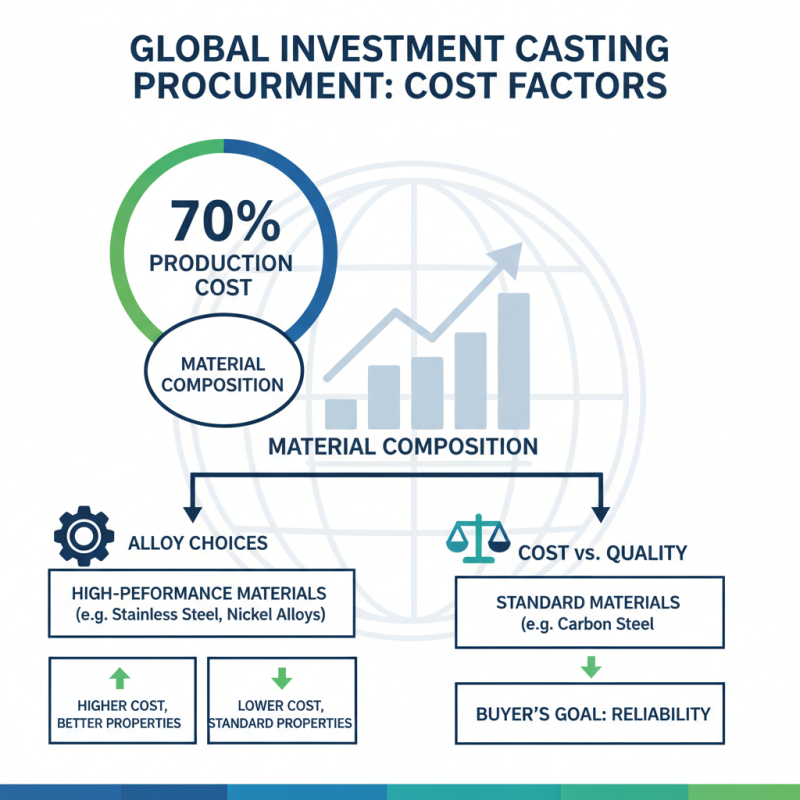
When it comes to global investment casting procurement, understanding cost factors is crucial. According to industry reports, material composition often accounts for up to 70% of total production costs. Alloy choices have a major impact here. High-performance materials like stainless steel or nickel alloys tend to be more expensive but offer better properties for specific applications. Balancing cost and quality is vital for buyers seeking reliability.
Labor costs also play a significant role. In regions with high labor wages, the total expenses can increase dramatically. For example, studies show that labor cost variations across countries can lead to a 30% difference in casting price. Customers must assess labor skills in different locations to ensure quality without overspending.
Transport and logistics shouldn't be overlooked. Shipping costs, customs duties, and turnaround times all affect the overall budget. Research shows that choosing suppliers closer to the target market can reduce these costs significantly. However, this might limit access to specialized foundries. Buyers must weigh the benefits of different suppliers against potential drawbacks.


 +86 180 0293 5268
 CONTACT Shixin
 CONTACT Shixin
 CONTACT Shixin