Top 10 High Precision Casting Techniques You Should Know?
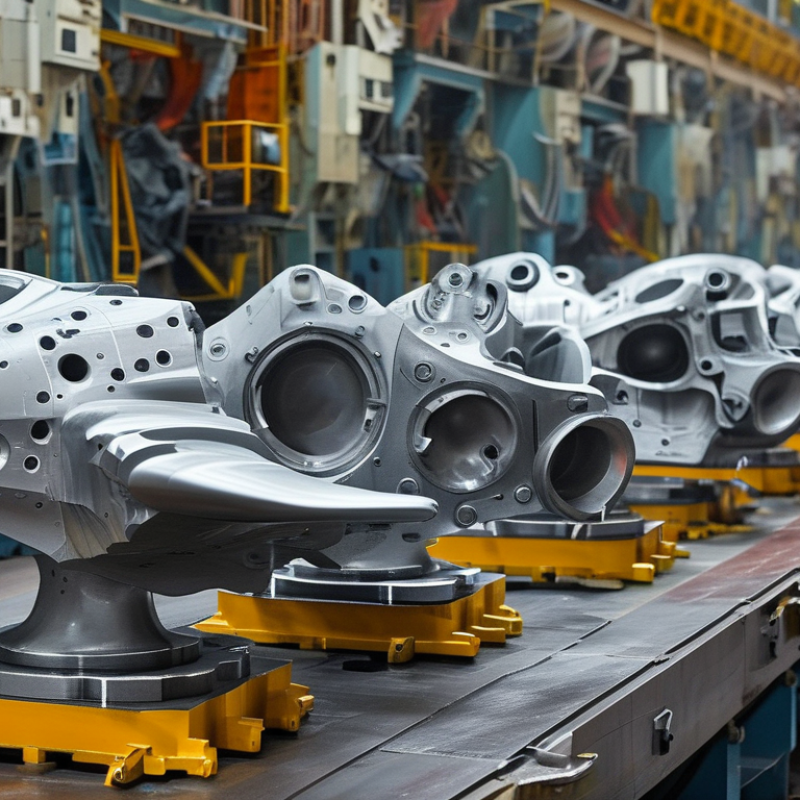
High Precision Casting techniques are becoming increasingly essential in various industries. These methods allow for the production of complex shapes and intricate designs with remarkable accuracy. The demand for precision parts is rising in sectors like aerospace, automotive, and medical devices.
In this article, we explore ten high precision casting techniques. Each technique has unique benefits. Some methods promise speed, while others focus on detail. Companies must choose the right method to meet their specific needs. Proper knowledge of these techniques is vital for engineers and manufacturers.
Understanding high precision casting can enhance product quality and reduce waste. However, selecting the ideal technique may not be straightforward. Factors such as material selection and project requirements play a role. Professionals must evaluate their options carefully to achieve the best results.
Overview of High Precision Casting Techniques
High precision casting is crucial for various industries. It provides detailed designs with exact specifications. Techniques like investment casting and sand casting are widely used. A recent report indicated that the global precision casting market is projected to grow by approximately 6.3% from 2023 to 2030. This growth reflects the increasing demand for lightweight and complex components.
Investment casting offers high dimensional accuracy. It allows for smooth surface finishes and reduces the need for machining. However, this method can be more expensive and time-consuming.
Sand casting, while less precise, offers flexibility for larger components. This technique can be more accessible for smaller operations, yet it may yield rougher surfaces.
Statistical data shows that the automotive sector accounts for 25% of the precision casting market. Industries require castings that meet tight tolerances. High precision castings often face challenges. For instance, defects and inconsistencies in materials can lead to significant production setbacks. Companies must continuously seek improvements to enhance yield rates and reduce scrap.
Investment Casting: Principles and Applications
Investment casting, also known as lost-wax casting, is a precise and versatile technique widely used in manufacturing. This method involves creating a wax model, covering it with a ceramic shell, and then melting away the wax to form a mold. The precision of this process allows for complex geometries and intricate designs that other casting methods may struggle to achieve. Industries frequently leverage investment casting for producing components in aerospace, automotive, and medical fields.
One notable aspect is the tolerance levels it can achieve. Parts created through investment casting can have tolerances as tight as 0.1 mm. However, it is crucial to monitor the entire process closely. Minor variations in temperature or material quality can lead to defects. This underlines the importance of having skilled workers who understand the nuances of each step in the casting process. Such diligence can minimize flaws and enhance overall product quality.
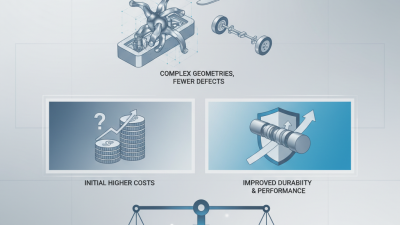
Moreover, while investment casting has many advantages, it does come with limitations. The process can be time-consuming and may require significant resources, especially for small production runs. Also, the initial cost of making the molds can be high. These factors demand careful consideration before choosing investment casting for a project.
Vacuum Casting: Benefits and Limitations
Vacuum casting is a popular technique in the realm of high precision casting. It involves creating a vacuum to eliminate air from the mold during casting. This process enhances the final product's quality. However, like any technique, it comes with both benefits and limitations.
One significant benefit is the ability to capture intricate details. Vacuum casting can produce complex shapes with high dimensional accuracy. This makes it ideal for prototypes and small production runs. Additionally, the method is relatively cost-effective, especially for low-volume projects. However, it may not be suited for larger runs due to longer production times compared to other methods.
When considering vacuum casting, it’s essential to focus on the material used. Some materials may not perform well under vacuum conditions. Always test materials before committing to production. Additionally, pay attention to the mold design. A poorly designed mold can lead to surface imperfections. Striking a balance between detail and efficiency requires careful planning.
Lost Foam Casting: Process and Advantages
Lost foam casting is a unique technique in the realm of high precision casting. The process involves creating a foam pattern, which is coated and surrounded by a granular medium. When molten metal is poured in, the foam vaporizes, leaving a precise metal replica. This method allows for intricate designs, making it suitable for complex parts. The levels of detail achievable are impressive, often surpassing traditional casting methods.
One of the main advantages of lost foam casting is its ability to eliminate the need for traditional molds. This reduces costs and production time. However, some challenges exist. Achieving the correct foam density is crucial. If not done accurately, defects may occur in the final product. The temperature control of the molten metal is also vital to avoid issues like misalignment or incomplete filling.
Lost foam casting improves repeatability in producing high-quality components. The technique is particularly beneficial for low to medium volume production. Despite its benefits, companies must weigh the challenges against their specific needs. Attention to detail throughout the process is essential to achieve the desired output. For precision engineering, understanding the intricacies of lost foam casting can lead to innovative solutions.
Die Casting: Techniques for High Volume Production
Die casting is a widely used method for high-volume production of metal parts. It allows manufacturers to create complex shapes with high precision. According to a report by the Grand View Research, the global die casting market size is projected to reach USD 40 billion by 2025, growing at a compound annual growth rate (CAGR) of 5.9%. This growth highlights the technique's reliability for large-scale operations.
In die casting, molten metal is injected into a mold under high pressure. This process can yield parts with excellent dimensional accuracy and surface finish. However, achieving ideal results can be challenging. Factors such as mold design, metal temperature, and injection speed can significantly affect quality. A study from the Journal of Materials Processing Technology indicates that slight variations in these parameters can lead to defects like porosity or surface imperfections. Thus, continuous monitoring and refinement of these processes are essential.
The efficiency of die casting makes it attractive for industries, including automotive and aerospace. However, the initial tooling costs can be prohibitive, prompting companies to carefully assess their production needs. While die casting offers speed, there is a need for thorough testing to ensure that the produced parts meet stringent industry standards. Exploring these trade-offs is integral for manufacturers aiming for long-term success in high-precision applications.



 +86 180 0293 5268
 CONTACT Shixin
 CONTACT Shixin
 CONTACT Shixin