 +86 180 0293 5268
Leave Your Message
-
CONTACT Shixin
-
 CONTACT Shixin
 -
 CONTACT Shixin
-
 CONTACT Shixin
China’s precision manufacturing sector is changing quickly, driven by automation, export demand, and tighter quality expectations. Grand View Research valued the global CNC machine market at approximately USD 88 billion in 2023. It also projects strong growth through 2030. However, machine-market data does not equal parts-market revenue. That distinction matters.
This guide examines China’s Top 10 Precision Cnc Machining Parts Suppliers through practical evidence. We consider machining capacity, material control, tolerance management, inspection systems, certifications, lead times, and export experience. A supplier may advertise five-axis machining, yet still struggle with thin-wall distortion or repeatability. Capability must be proven with inspection records, sample parts, and clear process documentation.
Small details reveal competence.
Shigeo Shingo, a respected industrial-engineering expert, warned, “The most dangerous kind of waste is the waste we do not recognize.” His principle remains relevant when comparing quotations, scrap rates, tooling decisions, and hidden rework costs. Reports from Deloitte and the International Federation of Robotics also show how digital production and automation are reshaping manufacturing competitiveness. Still, technology alone cannot guarantee reliable Precision Cnc Machining Parts.
This ranking is therefore not based only on website claims or equipment lists. It considers measurable quality evidence, customer communication, engineering support, and production consistency. Some supplier information is difficult to verify publicly. That limitation deserves attention. Readers should request recent audit records, material certificates, dimensional reports, and traceable samples before placing volume orders.
China Top 10 Precision CNC Machining Parts Suppliers
Precision CNC machining suppliers convert digital designs into controlled, measurable components. Their work begins with design review, material selection, process planning, and tooling decisions. Experienced teams check wall thickness, sharp internal corners, hole depth, and clamping risks before production starts. This prevents expensive rework later.
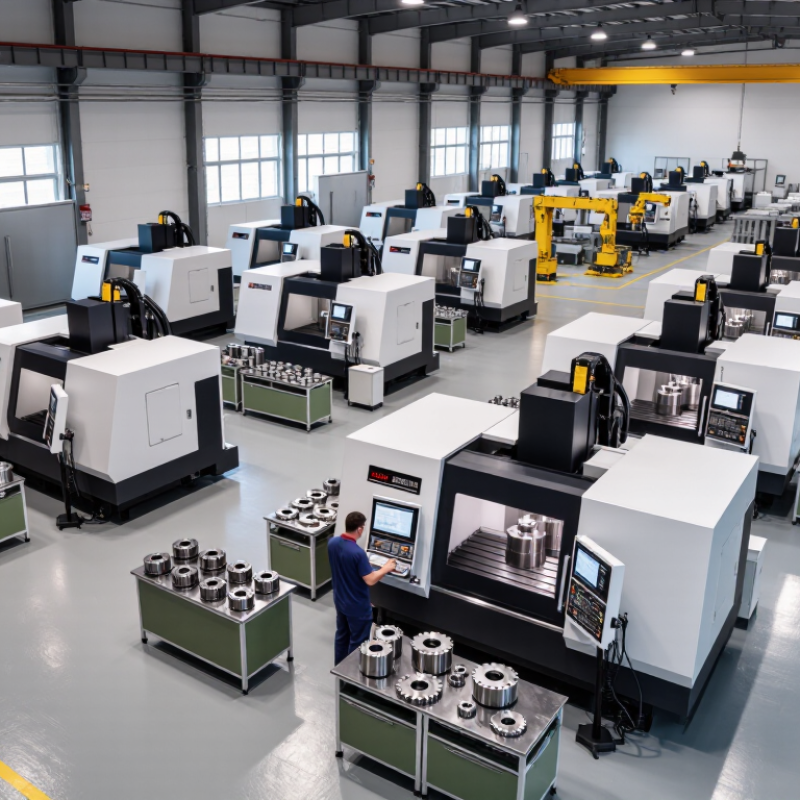
A supplier also manages machining, surface treatment, inspection, packaging, and traceability. Typical equipment includes three-axis and five-axis machining centers, turning machines, coordinate measuring machines, and optical inspection systems. The 2024 Global Machine Tool Outlook reported that Asia accounted for more than half of global machine tool consumption. This reflects the region’s large manufacturing capacity, but capacity alone does not prove precision.
Quality control must connect drawings with evidence. Suppliers commonly work with ISO 9001 systems and apply geometric tolerancing principles from ASME Y14.5. Inspection records may include dimensional reports, material certificates, hardness results, and first-article data. A 2023 manufacturing quality survey found that poor process control remains a major source of production delays. The number is useful, but surveys can simplify complex factory conditions.
Reliable suppliers communicate clearly about tolerances, minimum order quantities, lead times, and acceptable cosmetic marks. They should explain limitations before accepting a drawing. That matters.
In practice, even a well-equipped factory can miss a small burr, confuse a revision, or measure a part incorrectly. Regular calibration, operator training, and second-person review reduce these risks. However, no supplier should treat certificates as a substitute for actual inspection.
The entries below describe common supplier capability profiles, not a ranked list of named companies. Tolerances and lead times are indicative only and should be confirmed against the part drawing, material, quantity, and inspection requirements.
| Profile | Typical Machining Focus | Common Materials | Typical Processes | Indicative Tolerance Range | Common Applications | Typical Supplier Services |
|---|---|---|---|---|---|---|
| 1. General-purpose CNC shop | Small and medium-size custom parts in low-to-medium production volumes | Aluminum alloys, carbon steel, stainless steel, brass, engineering plastics | 3-axis milling, CNC turning, drilling, tapping | About ±0.05–0.10 mm for many standard features; tighter tolerances require drawing review | Equipment brackets, housings, shafts, fixtures | Drawing review, prototyping, deburring, basic dimensional inspection |
| 2. High-precision milling specialist | Complex prismatic parts, pockets, precision faces, and multi-feature components | Aluminum, stainless steel, tool steel, copper alloys | 3-axis and 4-axis milling, precision boring, tapping | Features may be held near ±0.01–0.05 mm when geometry, material, and inspection method permit | Machine components, instrument bodies, precision fixtures | In-process measurement, coordinate measuring machine inspection, deburring |
| 3. Multi-axis machining provider | Parts with angled faces, multiple sides, or features that benefit from fewer setups | Aluminum alloys, stainless steel, titanium alloys, engineering plastics | 4-axis and 5-axis milling, simultaneous multi-axis machining | Often specified by feature; positional accuracy depends on setup, geometry, and process control | Aerospace components, impellers, complex housings, medical device parts | CAM programming, setup planning, first-article inspection, traceability on request |
| 4. CNC turning specialist | Rotational parts and components with concentric features | Aluminum, stainless steel, carbon steel, brass, copper alloys | CNC turning, facing, grooving, threading, live-tool operations | Common turned dimensions may be held around ±0.01–0.05 mm depending on size and finish | Shafts, pins, bushings, fittings, threaded components | Thread gauging, surface-finish checks, bar-fed production for suitable parts |
| 5. Swiss-type machining provider | Small-diameter, long, slender, or high-volume precision components | Stainless steel, brass, aluminum, titanium, engineering plastics | Swiss-type turning, drilling, threading, cross-milling | Fine features can be produced to tight drawing tolerances; achievable values depend on material and part geometry | Medical components, electrical contacts, precision pins, small fasteners | Production planning, tool-life monitoring, lot inspection, material certification on request |
| 6. Sheet-metal and CNC combination shop | Machined parts combined with formed, cut, or welded sheet-metal components | Aluminum sheet, stainless steel, mild steel | CNC milling, turning, laser cutting, bending, welding | Machined features follow drawing tolerances; formed dimensions depend on material thickness and bend geometry | Enclosures, panels, chassis, brackets, equipment frames | Assembly, finishing coordination, fit checks, packaging |
| 7. Plastic machining specialist | Custom polymer parts where corrosion resistance, insulation, or low weight is required | Acetal, nylon, PEEK, PTFE, polycarbonate, acrylic | CNC milling, turning, drilling, engraving | Specified tolerances should account for polymer expansion, moisture absorption, and part size | Insulators, bushings, fluid-handling parts, machine guards | Material selection support, edge finishing, dimensional inspection |
| 8. Hard-metal and toolroom shop | Wear-resistant parts, tooling details, and components made from hardened materials | Tool steel, hardened steel, stainless steel, carbide where appropriate | Hard milling, CNC grinding, EDM, precision boring | Close tolerances and fine finishes are possible but depend on hardness, geometry, and process route | Jigs, fixtures, dies, mold components, wear parts | Heat-treatment coordination, grinding, surface-finish and hardness checks |
| 9. Prototype and short-run provider | Rapid development parts and small batches for design validation | Aluminum, stainless steel, brass, plastics | 3-axis milling, turning, drilling, tapping | Typically quoted to the supplied drawing; critical dimensions need explicit tolerances | Functional prototypes, engineering samples, pilot builds | Design-for-manufacturing feedback, sample inspection, revision control |
| 10. Production and quality-focused supplier | Repeat orders with documented process control and inspection requirements | Aluminum, steel, stainless steel, copper alloys, plastics | Milling, turning, multi-operation machining, automated inspection as applicable | Agreed per drawing and control plan; capability should be validated using measured production data | Industrial equipment, automotive components, electronics, fluid systems | First-article reports, inspection records, lot traceability, corrective-action support |