2026 Top Investment Casting Lost Wax Techniques Explained?
Investment Casting Lost Wax techniques play a crucial role in various industries. In the aerospace sector, over 60% of precision components utilize these methods. This technique offers exceptional accuracy, allowing for complex designs that meet stringent requirements. According to recent industry reports, the investment casting market is projected to grow at a CAGR of 5.2% from 2021 to 2026.
However, the techniques are not without their challenges. Ensuring consistent quality can be difficult. For instance, even minor defects in the wax pattern can lead to significant issues in the final product. Companies must invest in better quality control to address these concerns. Furthermore, the need for skilled labor remains imperative, yet there is a noted shortage in the workforce.
Despite these hurdles, Investment Casting Lost Wax continues to thrive. The customization potential and material efficiency are driving innovations. As manufacturers embrace advanced technologies, the future looks promising. However, the industry must reflect on its practices to overcome existing limitations.
Overview of Investment Casting and Its Importance in Manufacturing
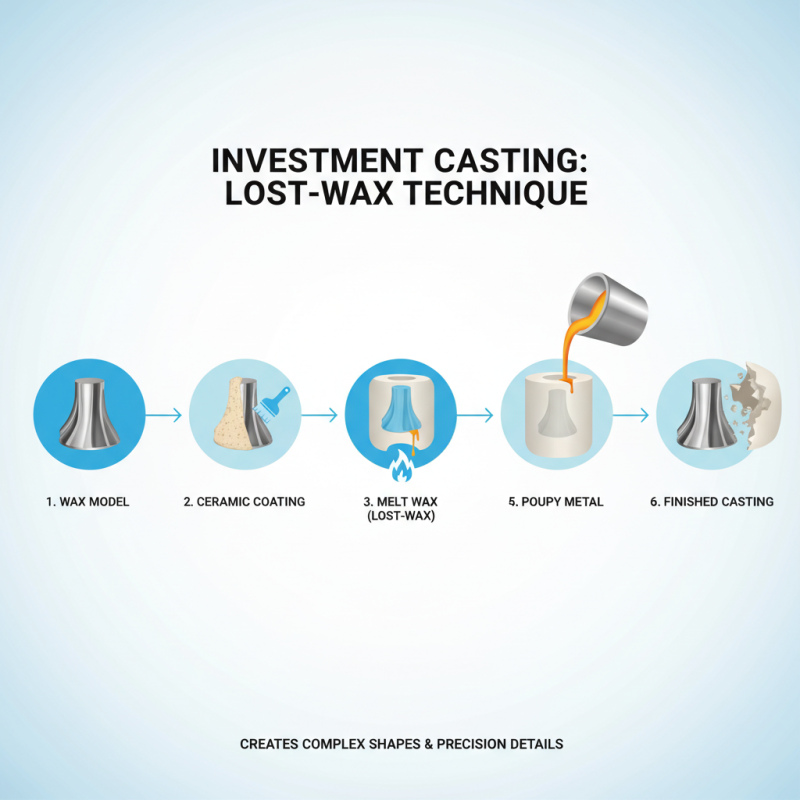
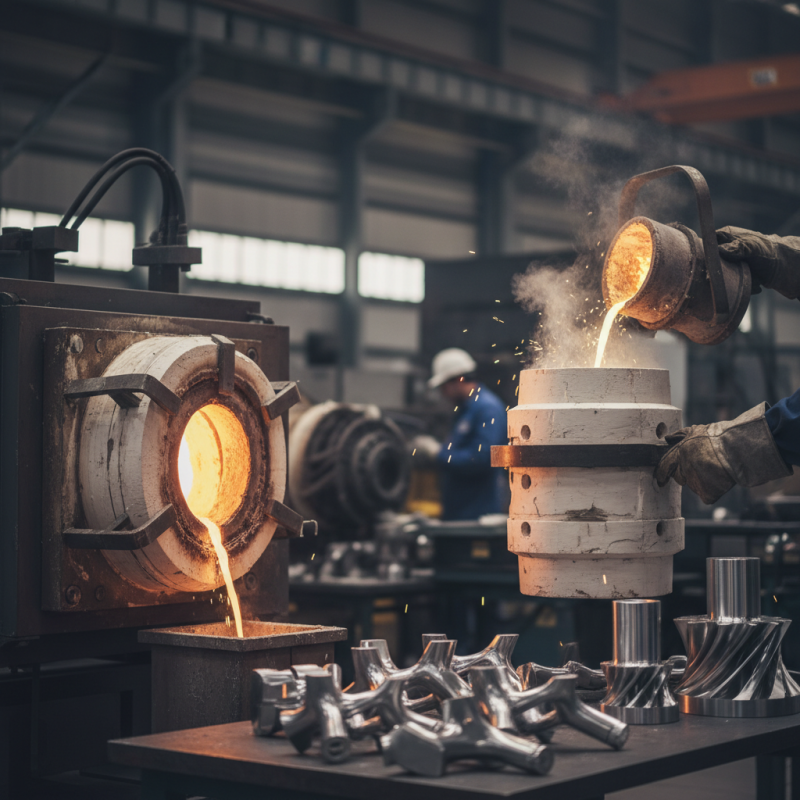
Investment casting, particularly lost wax techniques, plays a crucial role in modern manufacturing. This process allows for intricate designs and precise details. The method begins with a wax model, which is coated in a ceramic material. Once the ceramic hardens, the wax is melted away. This leaves behind a perfect mold for casting metal.
The significance of investment casting lies in its versatility. It is used to produce various components across multiple industries. The ability to create complex geometries is unmatched. However, this method is not flawless. Challenges can arise in achieving consistent wall thickness. Also, the process can be time-consuming and costly, especially for small production runs. Yet, when executed correctly, it leads to high-quality products that meet rigorous standards.
Understanding the Lost Wax Technique: History and Development
The lost wax technique has roots tracing back thousands of years. Initially used by ancient civilizations, it involved creating a wax model, covering it in clay, and then melting the wax away to form intricate metal parts. This method enabled artisans to produce highly detailed objects, from jewelry to sculptures.
Over time, the process evolved significantly. Today, manufacturers benefit from advanced materials and technology, enhancing precision and efficiency. According to industry reports, the global investment casting market is projected to reach $26 billion by 2026. This growth indicates the method's essential role in sectors such as aerospace and automotive, where quality and detail are paramount.
Tips: When using lost wax casting, ensure your wax models possess sufficient strength. Weak models can distort during the mold-making process. Additionally, regular maintenance of equipment is crucial for consistent results.
Despite its advancements, challenges remain. Environmental impact from wax disposal is a concern. Technological limitations can still affect scalability and precision. Ongoing innovation is key to overcoming these hurdles and enhancing the lost wax technique's reputation.
Step-by-Step Process of Lost Wax Casting: From Pattern to Finished Product
Lost wax casting is a fascinating technique used for creating intricate metal parts. The process begins with a detailed pattern, often made from wax, which is crafted with precision. The wax pattern is then coated in a ceramic shell to create a mold. This shell helps capture every detail of the pattern.
Once the mold hardens, it’s heated to eliminate the wax. This stage can be tricky; overheating might damage the mold or alter its shape. After the wax is removed, molten metal is poured into the mold. Care must be taken to ensure the metal fills every cavity. Any air pockets or contaminants can affect the final product.
After cooling, the mold is broken away to reveal the cast metal part. This step is exhilarating but sometimes disappointing. The finished piece may require additional cleaning or refining. Each cast reveals areas for improvement, making this process both an art and a science. Learning to perfect every stage can be challenging but also rewarding, as it leads to better results over time.
Advancements in Lost Wax Techniques: Innovations and Technologies
Investment casting using lost wax techniques is evolving rapidly. Innovations in materials and processes are making waves. New alloys offer better properties for casting. These advancements lead to stronger, more durable products. Technologies like 3D printing are enhancing pattern creation. This reduces waste and shortens lead times. It's impressive how these methods have transformed traditional practices.
Tips: Always consider the material's properties before casting. Test small batches to ensure quality. Experimenting may reveal unexpected challenges.
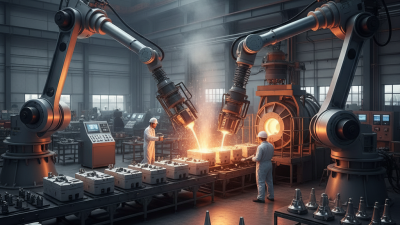
Another notable advancement is the automation of processes. Robotic arms handle repetitive tasks with precision. This minimizes human error in complex designs. However, increased automation can lead to reliance on technology. This dependence might overlook essential craftsmanship skills. Balancing innovation and traditional techniques is crucial.
Tips: Keep learning about manual techniques. They can improve your understanding of the casting process. Don't forget to engage in skills training regularly.
2026 Advancements in Lost Wax Techniques
Applications of Investment Casting in Various Industries: A Comprehensive Look
Investment casting, particularly lost wax techniques, is increasingly vital across various industries. This method offers precision and flexibility, making it suitable for intricate designs. Reports indicate that the investment casting market is projected to reach USD 22 billion by 2026. The automotive, aerospace, and medical sectors are major contributors. They rely on investment casting for components that require high dimensional accuracy and complex geometries.
The aerospace industry particularly benefits from this process. Parts like turbine blades and structural components are often made via investment casting. These components must withstand extreme conditions while maintaining structural integrity. Similarly, the medical field uses this technique for prosthetics and surgical instruments. Investment casting helps produce lightweight and durable parts. This precision reduces the need for extensive machining, saving time and resources.
Tip: When considering materials, how they affect the casting process is crucial. The right alloy can enhance durability. Stay informed on innovations in wax types and refractory materials to optimize your results. Regularly review your techniques, as slight adjustments can lead to significant quality improvements. Balancing cost and quality is a continuous challenge in this process.
2026 Top Investment Casting Lost Wax Techniques Explained
| Technique |
Material Used |
Applications |
Industry |
Advantages |
| Silica Sol Process |
Stainless Steel |
Aerospace Components |
Aerospace |
High precision and surface finish |
| Investment Casting with Ceramic Shells |
Carbon Steel |
Industrial Valves |
Manufacturing |
Robustness against high pressure |
| Lost Foam Casting |
Aluminum |
Automotive Parts |
Automotive |
Reduced machining time |
| Investment Casting for Complex Shapes |
Nickel Alloys |
Turbine Components |
Energy |
Ability to create intricate designs |
| 3D Printed Wax Patterns |
Various Alloys |
Medical Devices |
Healthcare |
Customization and fast prototyping |



 +86 180 0293 5268
 CONTACT Shixin
 CONTACT Shixin
 CONTACT Shixin